

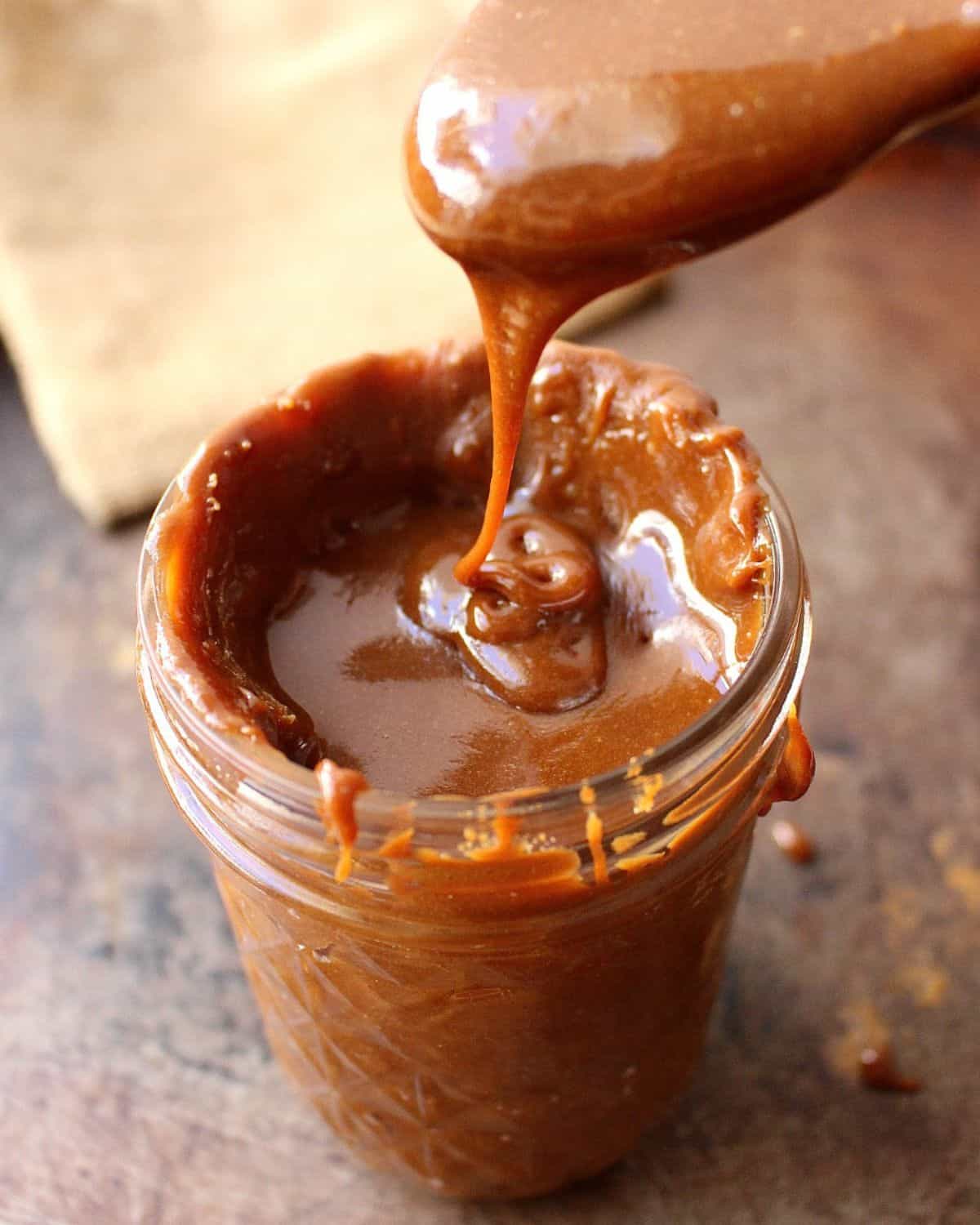
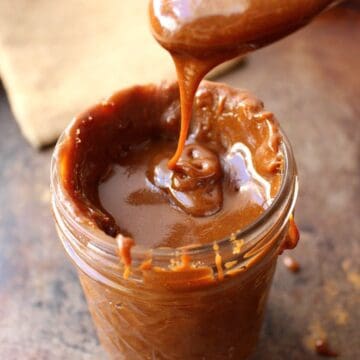
Cajeta is a traditional Mexican caramel sauce made with goat’s milk, sugar, and vanilla. It’s similar to dulce de leche, but the goat’s milk gives cajeta a distinct flavor and creamy texture.
This homemade cajeta recipe takes a little patience and plenty of stirring, but the result is worth it. Drizzle it over Panqué de Nuez, ice cream, pancakes, or sliced apples. It also makes a wonderful homemade gift during the holidays.
Why You’ll Love This Recipe ❤️
- It only takes four ingredients. Goat’s milk, sugar, vanilla, and baking soda are all you need.
- It tastes better than store-bought. Homemade cajeta is creamy, rich, and has that beautiful caramel flavor.
- It makes a great gift. Pour it into a pretty jar and give it to friends and family during the holidays.
- It keeps well. Store it in an airtight container in the refrigerator for up to two weeks.

-Maggie
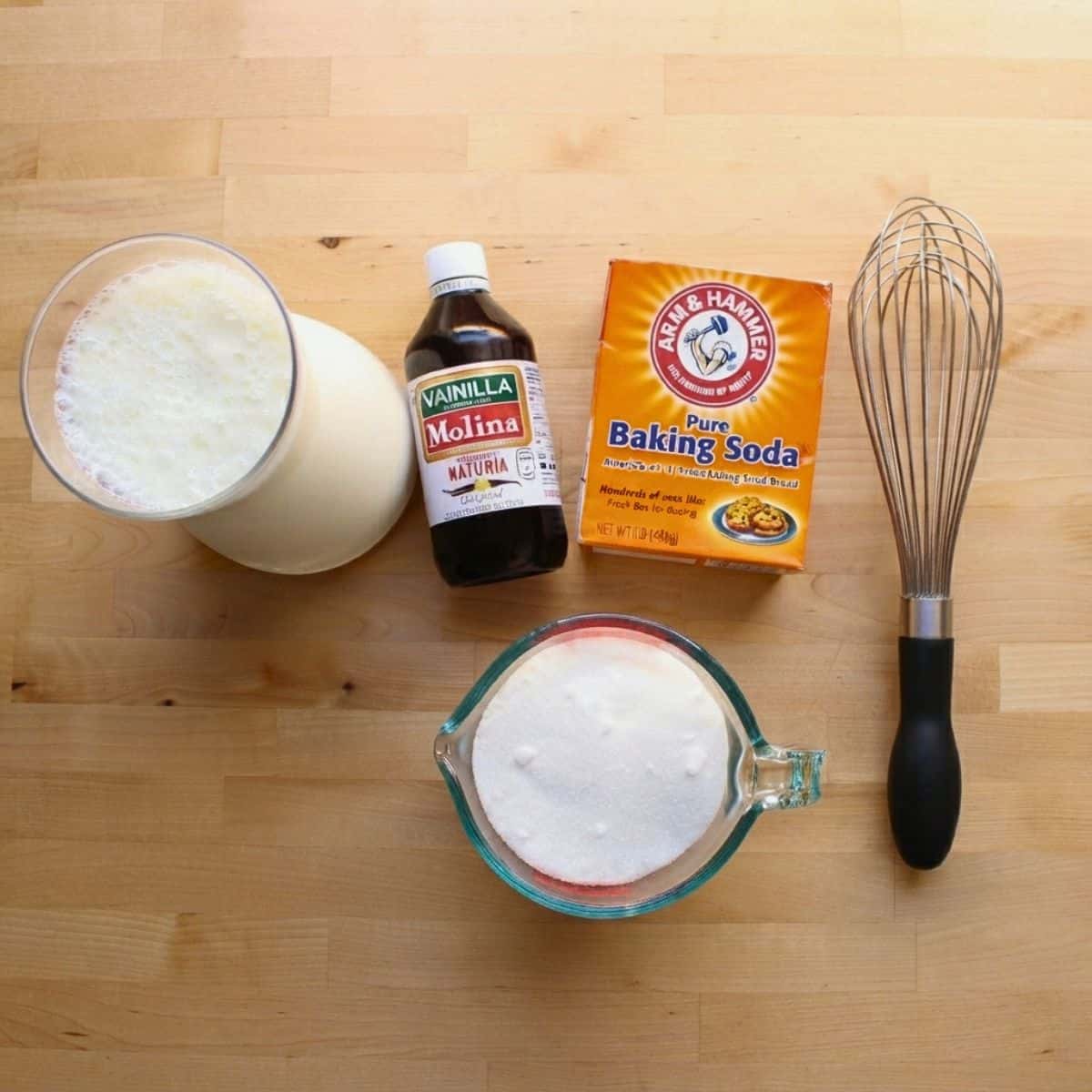
🥛 Ingredients
- Goat’s milk
- sugar
- baking soda
- vanilla extract
That’s it! This is a very simple recipe, but it requires a whisk and a lot of patience.
Know the Difference
Cajeta vs. Caramel vs. Dulce de Leche
The main difference is the ingredients used to make them.
- Caramel is made by heating sugar until it turns golden brown. Caramel sauce often includes butter, cream, or milk.
- Cajeta is traditionally made with goat’s milk and sugar, giving it a distinct flavor and creamy texture.
- Dulce de leche is traditionally made with cow’s milk and sugar and is similar to cajeta in texture and appearance.
The cooking process is similar, but the type of milk gives cajeta and dulce de leche their distinct flavors.
👩🏼🍳 Instructions
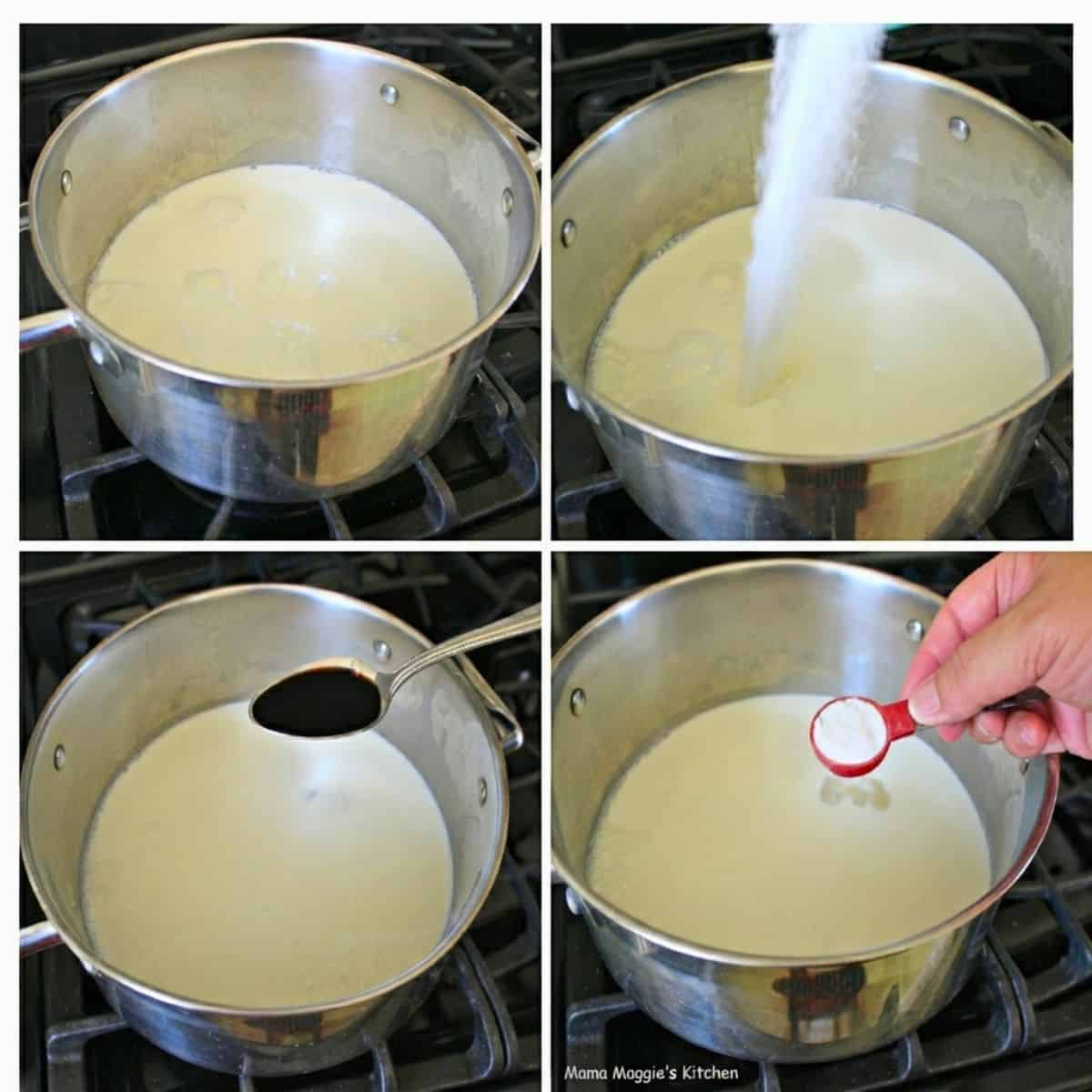
- Add the milk, sugar, and vanilla to a stock pot on medium heat.
- Once it begins to simmer, add the baking soda.
You’re going to need to play with the heat as it cooks.
The baking soda will cause the milk mixture to bubble and rise. That’s why you can’t leave the pot alone. You DON’T want it to boil over and go all over the stove.
Once it rises (because it will), change to low heat or turn the heat off completely until it goes back down. Then, turn the heat back on or keep it on low.
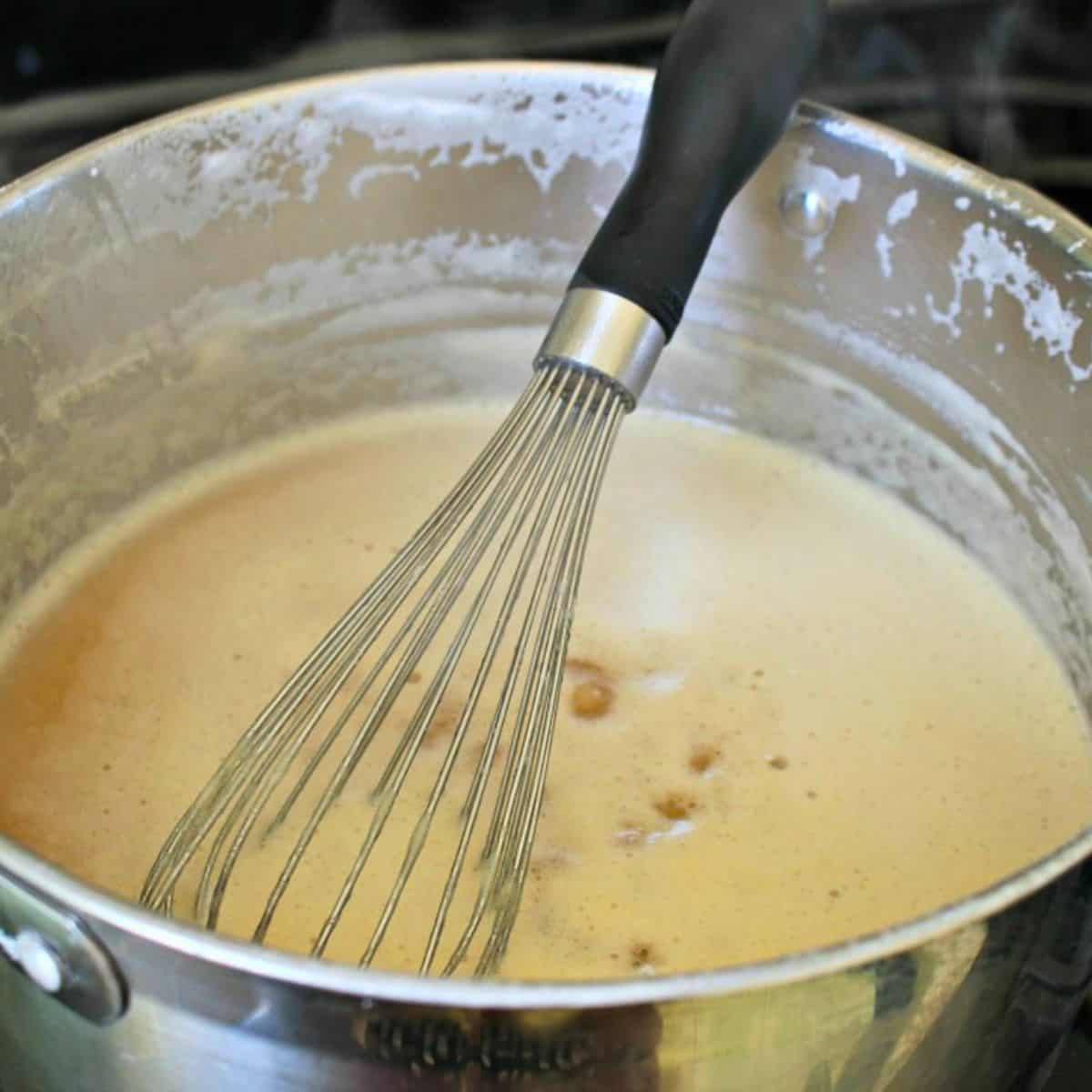
- After 30 minutes, this is what it looks like.
- Discard some of the foam, using a spoon.
Whatever you do, DO NOT stop stirring!
In Mexico, you will see this Mexican dessert made in large copper pots (cazo de cobre) with a long wooden paddle over a flame. Some home cooks will also make it in clay pots or a dutch oven.
Since most cooks north of the border don’t cook like this, I suggest you use a large pot. Choose a pot that will allow for the rise and fall of the simmering liquid.
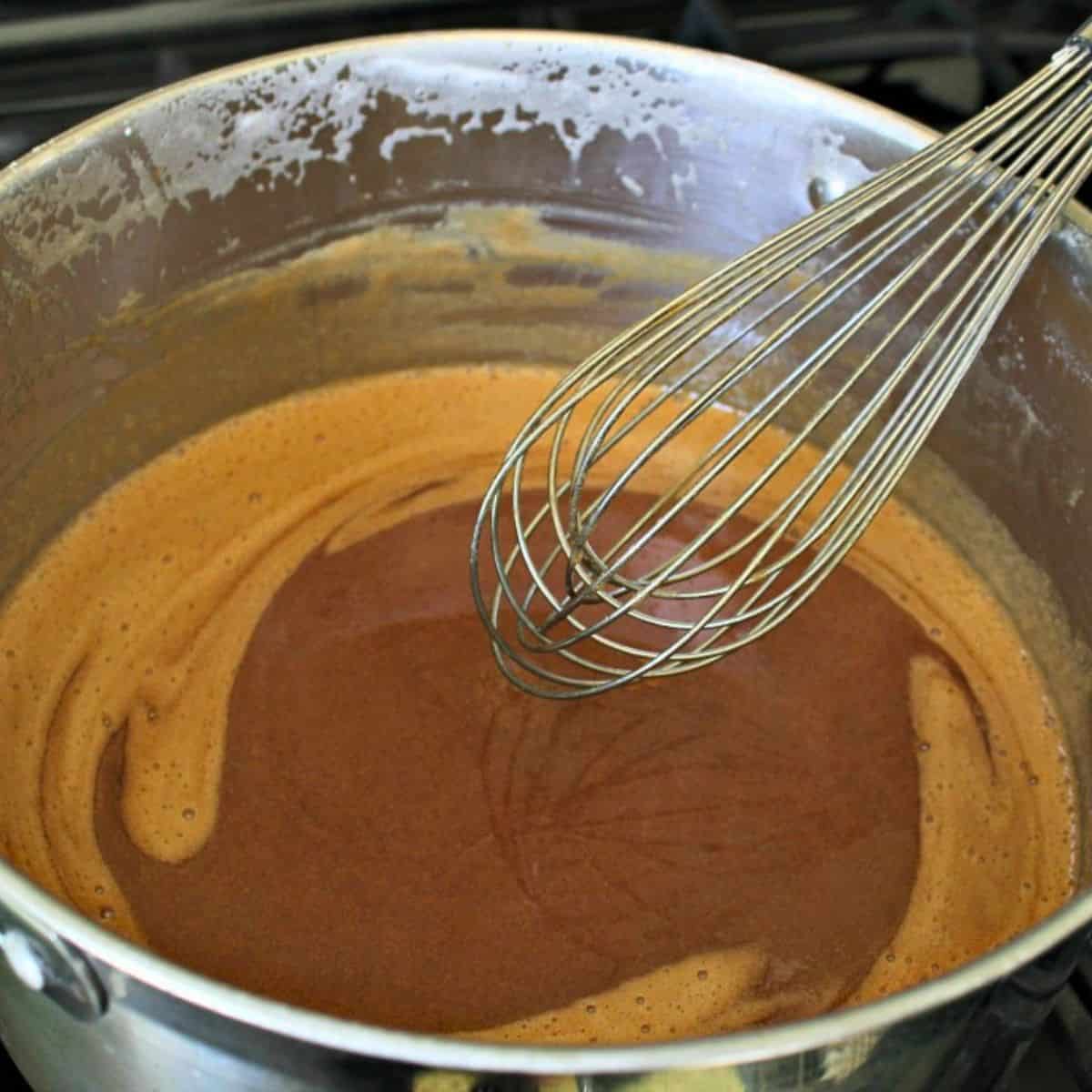
- After 55 minutes, this is what it looks like.
- Remove some more of the foam.
Notice how the color has changed. It has developed the golden-brown color we’re looking for.
The Maillard reaction happens when amino acids and sugar mix together. It gives the cajeta its brown color and complex flavor
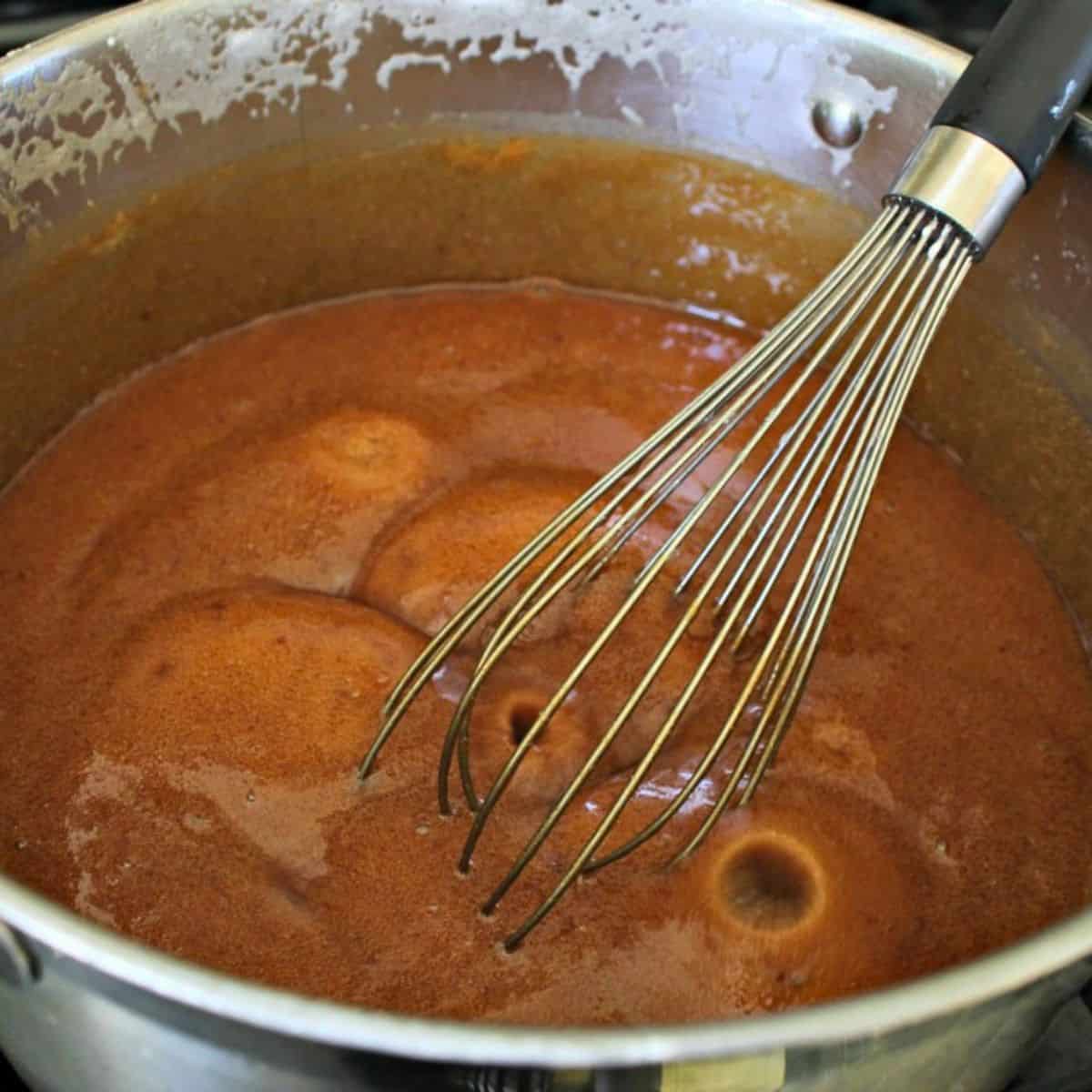
- See the large bubbles and the caramel color. It almost looks like lava.
- Turn off heat and let it rest for 10 minutes.
Check the consistency. It should be thick and stick to the wooden spoon or whisk. You should be able to see the bottom of the pot when stirring.
If you let it cook longer than an hour, it will become thicker and darker.
💪🏼 Team Work
Don’t go stir-crazy! (Wink! Wink!) Take turns making this cajeta candy.
If you are giving this as a gift, I suggest you make it a family affair and have others in your family take turns in the stirring.
🙋🏻♀️ Frequently Asked Questions
Cajeta is a traditional Mexican caramel sauce made by slowly cooking goat’s milk with sugar until it becomes thick, creamy, and caramel-colored. Vanilla is also commonly added for flavor.
Cajeta is often translated as Mexican caramel sauce or goat’s milk caramel. The word itself doesn’t have a direct English translation that completely describes the dessert.
Not exactly. Caramel is made by heating sugar until it caramelizes, while caramel sauce may include butter, cream, or milk. Cajeta is traditionally made with goat’s milk and sugar, giving it a distinct flavor and creamy texture.
The biggest difference is the milk. Cajeta is traditionally made with goat’s milk, while dulce de leche is traditionally made with cow’s milk. Both are slowly cooked with sugar until thick and caramelized.
Cajeta continues to thicken as it cools. If it becomes too thick, place the container in warm water for a few minutes to loosen it. You can also cook it for less time the next time you make it.
Yes. For a thicker and darker cajeta, continue cooking for about 15 minutes longer, stirring constantly. Keep in mind that it will thicken more as it cools.
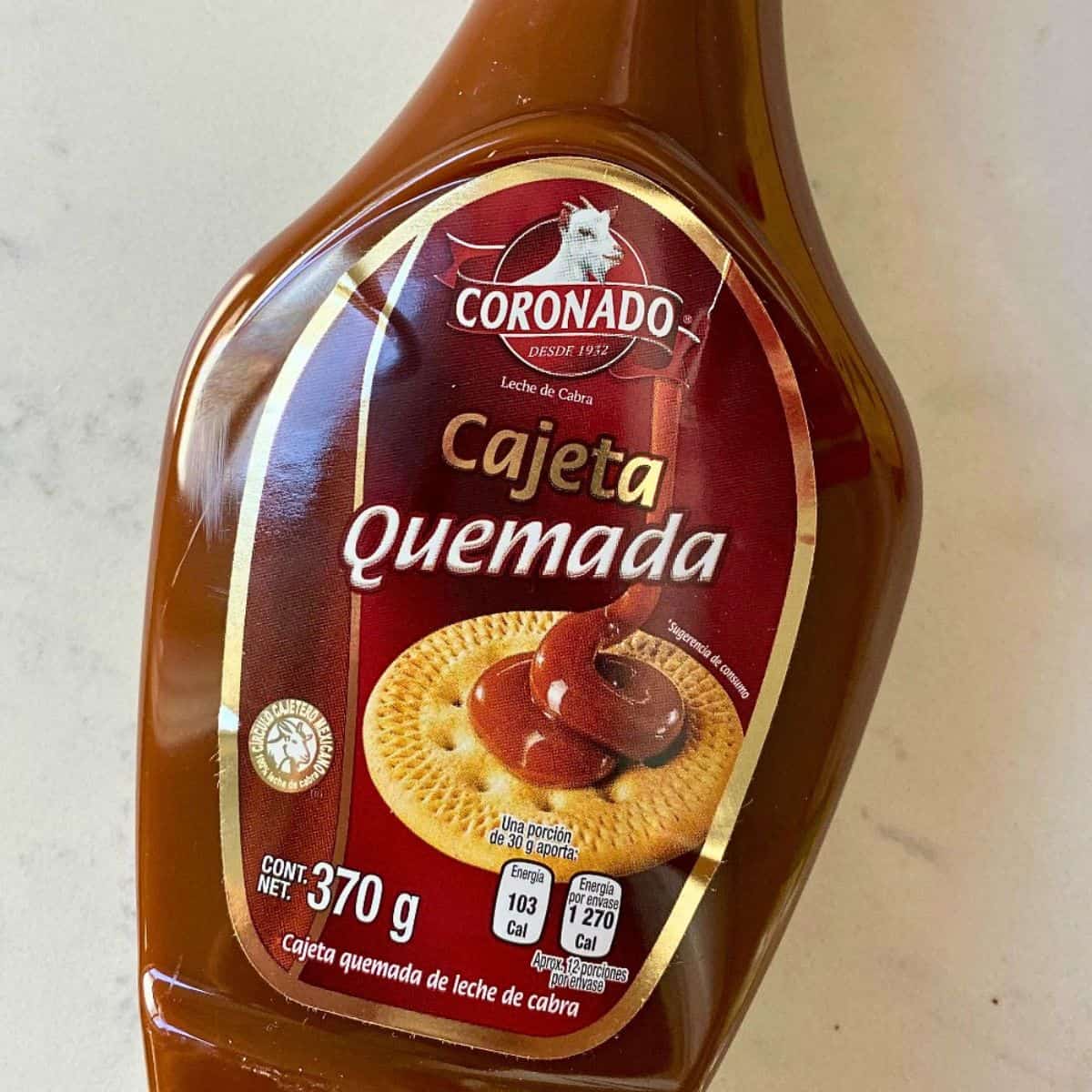
🛒 Where to Buy It
Cajeta Coronado is probably the most well-known brand in Mexico that makes this delicious dessert.
You can buy the squeezable bottle with its easy-pour design at just about any Mexican market. Some large chain grocery stores may even be offering it in the Hispanic food section. Or buy it online.
🫙 How to Store Cajeta
Place the cajeta in an airtight container and refrigerate for up to two weeks. If it becomes too thick, place the container in warm water for a few minutes before using.
Different Types of Cajetas
- Quemada – Translation “burned cajeta.” This version is one of the most popular types. Deep in color and has a mild burned taste.
- Cajeta Envinada – Originally made with wine, but now you’ll see brandy, tequila, rum and other liquor added to the caramel.
- De Vainilla – BINGO! That’s what we are making in this recipe. Since we are adding vanilla, it is considered cajeta de vainilla and has a creamy flavor.
🍰 More Mexican Desserts
I first published this recipe in 2019, and it’s still one of my favorite homemade gifts to make during the holidays.
Homemade cajeta takes a little patience, but that first spoonful makes all the stirring worth it.
Whether you call it cajeta, Mexican caramel sauce, or goat’s milk caramel, this is one sweet treat I’m always happy to have on hand.
Cajeta
Ingredients
- 4 cups goat milk
- 2 cups sugar
- 1 tablespoon vanilla
- ½ teaspoon baking soda
Instructions
- Pour all the ingredients (except for the baking soda) into a large, heavy stock pot.
- Bring to a simmer.
- Once the mixture begins simmering, carefully add the baking soda.
- The mixture will foam and rise, so add it slowly while stirring.
- When it begins to bubble over, reduce heat.
- (Or turn off completely until the bubbles reduce. Then turn back on to low-med heat).
- Stir for 45 minutes on medium-low.
- Remove some of the foam on top.
- It will begin to develop a caramel color.
- Stir frequently throughout cooking, making sure to scrape the bottom and sides of the pot.
- As the mixture thickens, stir constantly to prevent scorching.
- After 55 minutes, check the texture.
- The texture will be thick and coat the back of a cooking spoon.
- Remember that it will continue to thicken as it cools.
- Once this happens, remove from heat.
- Let cool for 10 minutes before pouring into an airtight container.




I can’t take my eyes off these sensational looking caramel! Oh my goodness, this is really tempting. I could use this dark caramel with so many recipes, i’m gonna try it with popcorns for the weekend. YUM!
Whoa! this is something new. Love all the ingredients and so well explained.
Do you have to use goat milk? If so where do you find goat milk. I have never seen it in any dairy section of any store…
To make cajeta, yes, you need goat’s milk. I have it at my regular store. I also know that Whole Foods and specialty stores have it.
What a fabulous variation on caramel, I must try this! I love the idea of using goat’s milk and appreciate your explanation of the difference between caramel, cajeta, and dulce de leche. Thanks for sharing a fun recipe and your pictures are beautiful.
This caramel sauce looks so thick, delicious and decadent! It should be a requirement to add this sauce to all fall and holiday desserts from now until Christmas!
I’ve been making my own cajeta for quite a long time, and I never stop enjoying it. It is just too good. Love the consistency of yours – just the way I like mine. I should definitely try your recipe – it looks great!
Wow! I never tried to use goal milk in my recipes before, but it looks so delicious! Does it come out creamier than a regular caramel?
Ooh I haven’t heard of this before, but it sounds so rich and sweet! Look forward to making a batch soon!
One of my favorite sauces to make. I use it very often on my favorite buns with a cup of hot drink. I wonder if this recipe is easier than the one I am currently using… That would be amazing! 😉
I have always wondered about the difference between cajeta, caramel, and dulce de leche. I love your idea of giving this as Christmas presents. What a great gift!
I had to look it up myself. lol. Cajeta is delicious! Hope you get to try this recipe.
Yum! This Cajeta looks really delicious, Maggie. This will be perfect on my toast every breakfast or for my dessert. Thank you for sharing.