

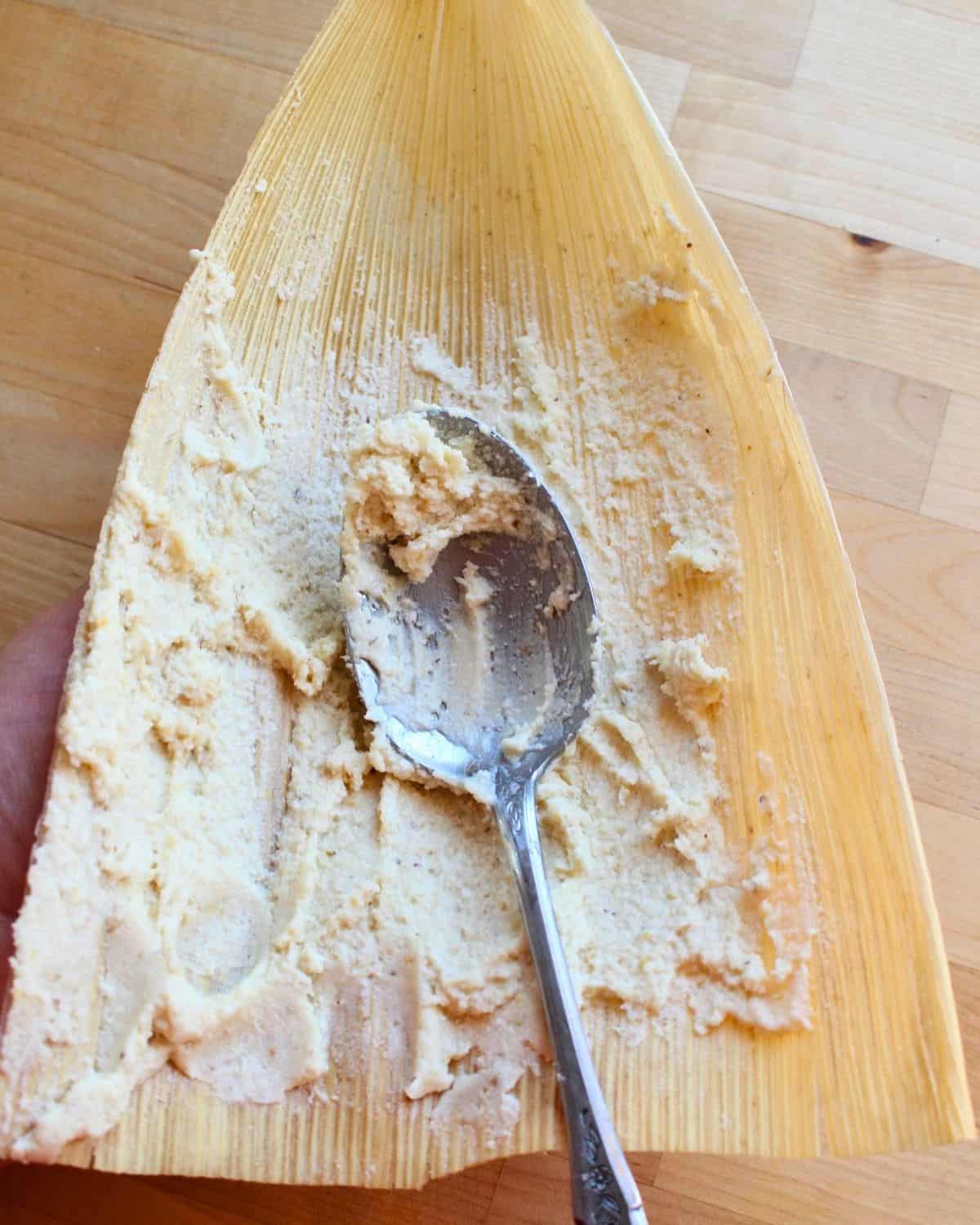
Masa for Tamales (Tamale Dough Recipe) 🫔 is an easy recipe for making soft, flavorful tamale dough with masa harina, lard or shortening, broth, baking powder, and salt. This traditional Mexican masa is easy to spread onto corn husks and works with your favorite savory tamale fillings.
I’ve been making tamales with my family for years, and I’ll show you how to make masa for tamales with shortening, get the right consistency, and troubleshoot common problems so your homemade tamales turn out tender.
My grandmother was famous for her Tamales Rojos. They’re a must try!
Why You’ll Love This Recipe ❤️
- Easy to make. A stand mixer or hand mixer makes whipping the fat and mixing the masa straightforward.
- Soft and spreadable. The right balance of fat and liquid helps create tender masa that’s easy to spread onto corn husks.
- Make it your own. Use lard for traditional flavor, shortening as an alternative, and broth to add more flavor to savory tamales.
- Perfect for tamale season. Make a batch for family tamaladas, Christmas gatherings, or whenever you’re craving homemade Mexican tamales.

-Maggie
What Is Masa for Tamales?
Masa for tamales is a soft corn dough spread onto corn husks, filled, wrapped, and steamed. It’s typically made with masa harina, fat such as pork lard, liquid, and seasonings.
Masa harina is the dried corn flour you mix with the other ingredients to make the dough. It is different from masa preparada, which is masa that’s already been prepared and may be available at Mexican markets and tortillerías.

Ingredients You’ll Need
Masa Harina
- Use masa harina made specifically for tamales. Maseca is one popular brand, but there are other brands available.
- Masa harina for corn tortillas and masa harina for tamales are not always interchangeable. Tamale masa harina is typically formulated to create the right texture for a soft, tender tamale dough.
- Masa harina is also used to make Mexican gorditas, tlacoyos, and Mexican sopes.
Warm Liquid
- You can use warm water for a basic masa.
- For more flavorful savory tamales, I recommend using chicken broth, pork broth, beef broth, or vegetable broth.
- You can also use some of the cooking liquid from your meat filling. This is one of my favorite ways to add extra flavor to the masa.
Pork Lard vs. Vegetable Shortening (Which is Best?)
- Traditional pork lard gives an authentic flavor and a rich, melt-in-your-mouth tenderness. Vegetable shortening is a fantastic alternative that whips up into a light, fluffy, and easy-to-spread dough.
- If you’d rather make tamale masa without it, see my masa with oil.
Baking Powder
- Baking powder helps give the masa a lighter texture.
Salt
- Salt brings all the flavors together. If you use unsalted broth, you may need to adjust the amount of salt.

🥣 How to Make Masa for Tamales
1. Whip the Shortening
- Start by adding the vegetable shortening to the bowl of a stand mixer.
- Using the paddle attachment, whip the fat until it becomes light and fluffy.
- You can also use a hand mixer.
- Once the fat is whipped, set it aside.
- Traditionally, tamale masa is made with lard. Lard is used in both savory and sweet tamales and helps create a soft, tender texture.
2. Mix the Dry Ingredients
- In a large bowl, combine the masa harina, baking powder, and salt.
- This is a basic tamale masa recipe, so there are no spices in the dough.
- That’s intentional.
- The flavor of the masa can come from your filling and the broth or cooking liquid you use.
3. Add the Masa Harina Mixture
- Add some of the dry masa harina mixture to the whipped lard or shortening.
- Mix on low speed using the paddle attachment, then gradually increase the speed to medium.
- Continue adding the masa harina mixture a little at a time.
- You want the mixture to become light, creamy, and fluffy.
- Think of the texture of soft cookie dough.
4. Add the Liquid
- Slowly add warm water or broth to the masa mixture.
- Alternate between adding the liquid and the remaining masa harina mixture.
- Continue mixing on low speed, scraping down the sides of the bowl as needed.
- Keep adding liquid and masa harina until you reach the right consistency.
- The finished masa should be soft and spreadable—not dry, stiff, or crumbly.
- For savory tamales, I recommend using chicken broth, pork broth, beef broth, or vegetable broth.
- You can also use the flavorful cooking liquid left over from cooking your meat filling.
5. Do the Float Test
- This is the part that always gets people talking: the float test!
- Take a small spoonful of prepared masa and drop it into a glass of water.
- If the masa floats, it’s ready to use.
- There is no need to be afraid of over-mixing your masa here. Continue beating it until it becomes light enough to float.
- If your masa isn’t floating, it may need more whipping or additional fat.
- Note: The float test is a traditional kitchen test, but it isn’t the only way to judge your masa. The most important thing is that the dough has a soft, light, spreadable consistency.
Once your masa is ready, it’s time to spread, fill, fold, and steam your tamales!
For leftover masa, make champurrado. It goes perfectly with tamales.

🤔 What Should Masa for Tamales Look Like?
Tamale masa should be soft, moist, and easy to spread across a soaked corn husk. It should hold together without being stiff, crumbly, or runny.
- Too dry: The masa feels stiff or cracks when you spread it. Add warm broth or water a little at a time.
- Too thick: The masa is difficult to spread evenly. Add a small amount of liquid and mix again.
- Too wet: The masa is loose and difficult to spread in an even layer. Add a little masa harina intended for tamales, if needed, and mix thoroughly.
- Just right: The masa spreads easily and stays in an even layer on the husk without running off.
👩🏼🍳 Tips for Making Masa for Tamales
- Grab a couple of friends and have a tamalada, or tamale party. It will go quicker with friends.
- If your masa for tamales is grainy, add more liquid and more fat (shortening or lard, whatever it is you are using).
- Grainy also means it’s the wrong masa harina. Make sure the masa harina is FOR TAMALES.
- If the masa is too stiff, add more liquid (whatever broth or water you are using).
- If you run out of broth, use water but adjust the salt by adding more.
- If you run out of shortening or lard, you can add oil. Be careful what type of oil you add. Olive oil will change the flavor.
- Have your filling and masa for tamales ready to go.
- Soak the corn husks the night before.
- Make as many tamales as you can and freeze them.
- Invest in a good steamer.

🙋🏻♀️ Frequently Asked Questions
To make masa for tamales with lard, whip the lard until light and fluffy. Gradually mix in masa harina, baking powder, salt, and warm broth or water until the dough is soft and easy to spread.
Choose masa harina specifically labeled for tamales. Different brands can absorb liquid differently, so adjust the liquid as needed to achieve a soft, spreadable dough.
Yes. Depending on your recipe, vegetable shortening or oil can be used instead of lard. The flavor and texture may differ from traditional lard-based masa.
Masa harina is dry corn flour that you mix with liquid and other ingredients. Prepared masa, or masa preparada, is already-mixed dough that may be sold at Mexican markets and tortillerías.
Your masa may need more liquid or fat. Add warm broth or water gradually, along with a little additional lard or shortening if needed.
Grainy masa can be caused by an incorrect type of masa harina, not enough liquid, or not enough fat. Make sure you’re using masa harina intended for tamales and adjust the liquid and fat as needed.
The masa should be soft, light, and easy to spread onto a soaked corn husk. You can also use the traditional float test by dropping a small amount of masa into water. If it floats, it’s ready.
Masa can be frozen in an airtight, freezer-safe container, although its texture may change. Thaw it in the refrigerator and mix it again before using, adjusting the liquid if necessary.
If your masa fails the float test, it usually means the fat hasn’t been whipped enough or the dough is too dense. Return the dough to your stand mixer and beat it on medium-high speed for another 2–3 minutes, adding an extra tablespoon of melted lard or warm broth if it feels dry.

🫔 What Can You Make With This Tamale Masa?
- Pork and beef tamales: Instant Pot Pork Tamales, Beef Tamales, Turkey Tamales.
- Chicken and savory tamales: Green Chicken Tamales, Red Chicken Tamales, Pickled Jalapeño and Cheese Tamales, Vegetable Tamales.
- Sweet and traditional varieties: Tamales Dulces, Tamales de Elote, Bean Tamales.
I’ve been making tamales for as long as I can remember. Some of my favorite memories are making them with my grandmother, cousins, and family in Durango, Mexico, especially during Christmas and the posadas.
Now I get to share that tradition with my own family—and put my son and husband to work, too! 😂 My son would probably tell you that his favorite part of the tamale-making process is eating them. Honestly, I can’t blame him.
I hope this Masa for Tamales recipe becomes part of your family traditions, too.
How to Make Masa for Tamales (Tamale Dough Recipe)
Ingredients
- ⅔ cup lard (or shortening)
- 2 cups masa harina 20 ounces (for tamales)
- 1 ½ teaspoon salt
- 1 teaspoon baking powder
- 1 ¾ cups hot water (or chicken broth)
Instructions
- Beat the lard with your mixer until smooth. About 2 minutes.
- In a large bowl, combine the masa, salt, and baking powder.
- Add the dry ingredients in small batches to the mixer.
- Alternate with the water until completely mixed.
- Beat until smooth, and scrape down each time.
- Continue mixing until the masa is smooth and soft. Scrape down the sides of the bowl as needed.
- The masa should be soft, smooth, moist, and easy to spread. It should not be stiff, dry, or crumbly.
Video
Notes
- 8 cups masa harina
- 2½ cups lard or shortening
- 7 cups chicken broth or water
- 5 teaspoons salt
- 4 teaspoons baking powder
- 16 cups masa harina
- 5 cups lard or shortening
- 14 cups chicken broth or water
- 10 teaspoons salt
- 8 teaspoons baking powder
- You can use all water and omit the chicken broth. You can also use the broth from the cooked meat filling.
- If you run out of shortening or lard, you can also use oil. Be careful on what type of oil. Some oils such as olive oil will change the flavor of the masa and the tamales.
- This is a basic masa recipe. Add spices to flavor the masa. See post for suggestions.
- Tamales last 5 days in the refrigerator.
- Tamales last 6 months in the freezer.


What is the best Maseca to make masa for tamales ?
Look for the Maseca bag that says “for tamales” or it might just say “tamales.” The other kind is for tortillas or gorditas and does not make good masa for tamales.
Can you use Coconut oil? Instead of lard?
Yes, you can use coconut oil instead of lard or shortening. Use softened coconut oil then whip it up to resemble lard. It’s equal amounts so you don’t have to worry about different measurements. The only concern I would have when making masa for tamales using coconut oil is the taste. The coconut oil will affect the flavor of the tamales.
Can’t wait to try this.thanks
You’re going to love it! Provecho.
I had a tamalada party at my house for the first time I made tamales EVER.It was for my bday
A couple of days before I made the fillings: beef, pork Chicken. Chicken mole. I had5 to6 people making them…thier first time too.
I had a whole bunch of people eating them (about 20 or so) and one of my guests considered herself a tamle expert and she said they were great!. The Tamalada was a success! THANKS FOR ALL YOUR RECIPES…LOVE THEM ALL!
GWEN
How fun! Now I want to do a tamalada for my birthday. lol. Thank you for your comment!!
Only had butter, not lard or shortening, this was sooo great! Whole family gobbled them up!
Butter for the win! So glad this masa for tamales recipe worked out great for you. The fact that the whole family gobbled them up says it all!
I’ve been making tamales for over 45 years. I’ve always had a problem with the masa being consistent, I’m going to give this a try, fingers crossed. Will be making over 100 this time around..
Fingers crossed for that perfect masa consistency on your big batch. You got this! Happy tamale making!